



What happens at a lens follow-up exam
Buying lenses is the easy part. A lens routine that stays safe over years includes regular check-ups, and annual eye exams are commonly advised for lens wearers.
Why regular check-ups matter for lens wearers
Lenses sit directly on the eye for hours at a time, so small changes in fit or eye health can matter more than they would for glasses wearers. A follow-up helps catch those changes early, when the fix is usually a tweak rather than a treatment. It also confirms the lens plan still matches your eyes, which can shift over time. Waiting for a problem to appear is a more expensive way to manage the same thing.
Contact lens wear puts a thin layer of plastic between your tear film and the air. That is why a lens-related check-up looks at things a normal prescription test skips: how tears move under the lens, whether the edge rubs, and how the front surface of the eye is holding up. An eye-care follow-up exam is also your chance to explain what your routine really looks like, so the advice you get fits your week instead of a textbook.
What gets checked
A lens-related visit typically reviews your vision, how the lenses sit and move on the eye, and the health of the front surface of the eye. Your eye-care professional will also ask about comfort, wearing hours, and any symptoms you have noticed. Bring the actual lens details, since fit and material matter to the assessment. The exam is also the moment to raise anything you have been tolerating quietly.
Visual acuity with lenses in place
How well you see right now
Fit and movement on the eye
Lens centring and travel
Cornea and tear film health
Front surface of the eye
Comfort and wearing hours
Your reported experience
Lens type, material and replacement cycle
Bring the real details
Fit and comfort reviews
Lens fit is checked, not assumed. A lens that is slightly tight or loose can sit on a correct prescription and still cause comfort problems, or vision that comes and goes through the day. Wearers often describe this as lenses that work well some days and not others. That points to fit rather than to the prescription, and it is one of the most fixable things a follow-up visit can surface.
When to ask about fit
- Vision sharpens and blurs without the prescription changing.
- A lens feels noticeable on one eye and not the other.
- Comfort fades sooner than it used to on the same lens brand.
- A lens often sits off-centre or needs repositioning.
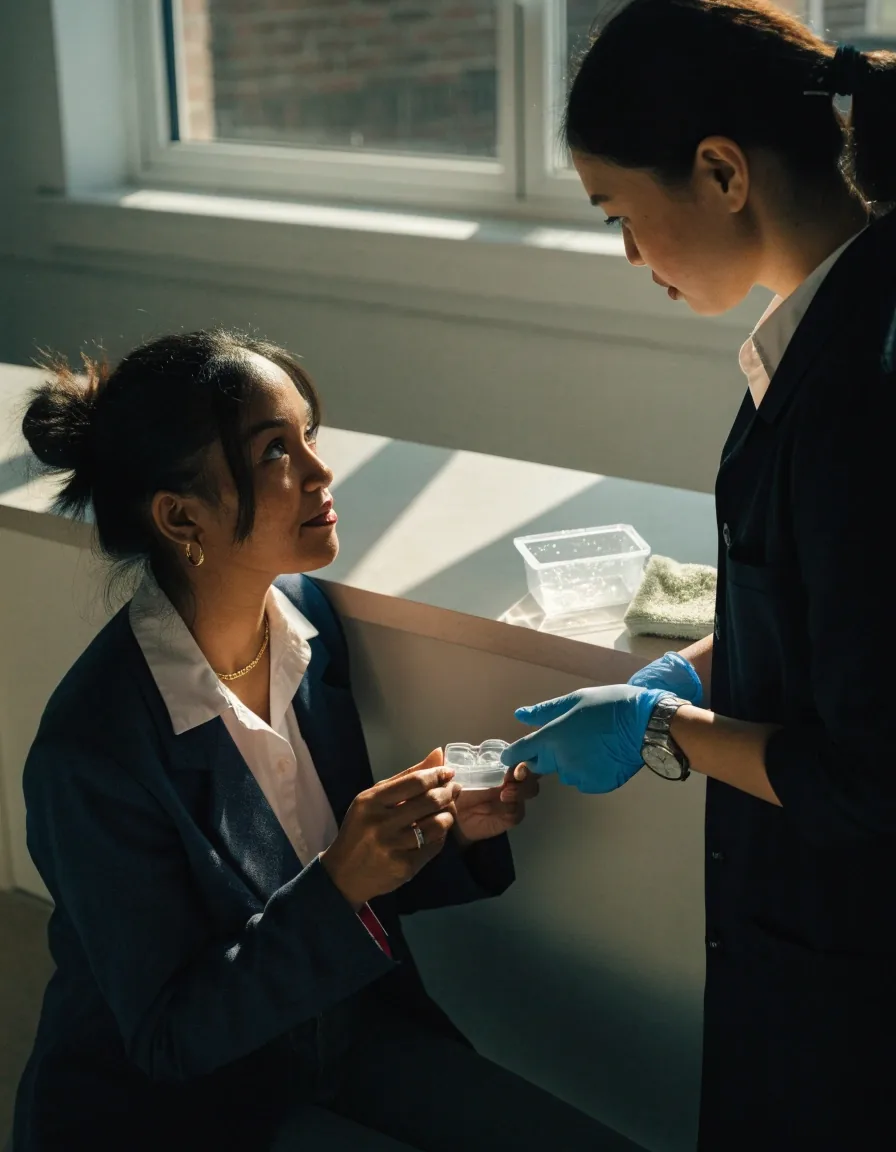
Bringing your real routine to the appointment
Tell your eye-care professional what you actually do, not what you know you should do. Naps in lenses, occasional overnight wear, topping up solution instead of replacing it, or wearing a lens past its replacement date are all common, and all worth discussing. None of it is a confession. It is the information that decides whether your current lens plan is realistic for your life.
How often to go
Annual exams are commonly advised by manufacturers and eye-care sources, but your own schedule may differ depending on your lens type, prescription and history. Extended wear contact lenses, rigid gas permeable lenses, and any previous eye issue can shift the recommended interval. Ask what applies to you instead of assuming the default fits.
If you change lens brands, switch from daily disposables to a longer cycle, or start sleeping in lenses, that is a good moment to book rather than wait for the next slot. The same applies after a bout of redness or a course of eye drops.
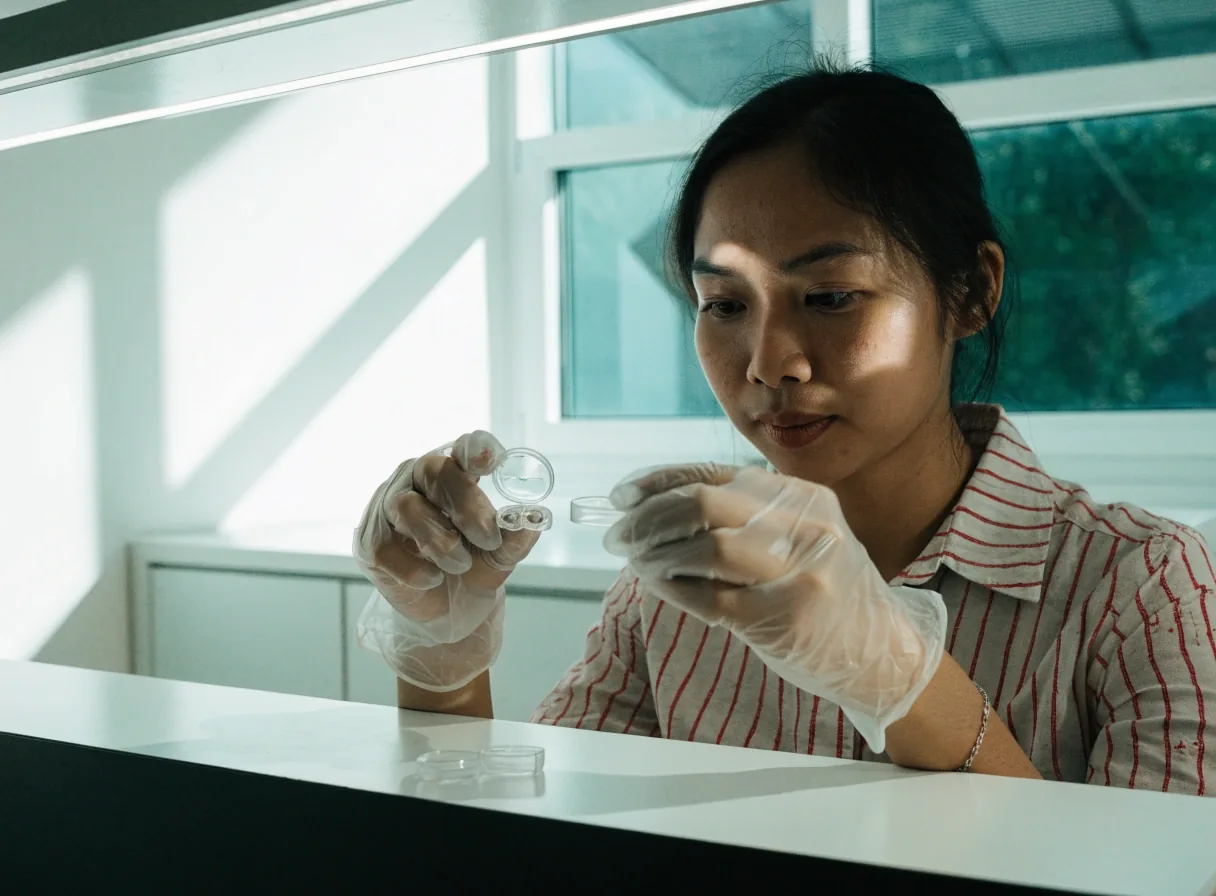
A fresh case, an empty one, and the spare you keep in a bag: what you bring to the appointment tells your eye-care professional more than a description does.
Between visits: what warrants a call
Remove and call
- Persistent redness that does not settle.
- Pain, or a gritty feeling that keeps building.
- Light sensitivity or discharge.
Track and mention
- Dryness at the end of a long day.
- Comfort that fades two hours earlier than it used to.
- Vision that fluctuates through the afternoon.
Call promptly
A sudden change in vision is not something to wait out until the next scheduled visit. Remove your lenses and seek advice rather than pushing through the day.
Mild, brief dryness at the end of a long day is a different situation from pain or a vision change. Knowing which is which is the point of paying attention to your own comfort, and it is what makes a scheduled appointment more useful when it comes.

Bringing the visit into your routine
The most useful habit is a short note on your phone when something feels off, with the date and what you were doing. Patterns emerge quickly that way, and a follow-up exam becomes a specific conversation instead of a vague everything is mostly fine. It takes seconds and it makes the appointment more productive.
Worth writing down: the day you opened a new lens, the hours you wore them, when the discomfort started, and whether the lens was near its replacement date. That is enough to turn a feeling into a pattern your eye-care professional can work with.
Questions about follow-up visits
Do I need a follow-up exam if my lenses feel fine?
Regular follow-up checks are recommended for lens wearers, and annual exams are commonly advised. Fit and eye-health changes can appear before comfort does, so feeling fine is not a substitute for a check.
What should I bring to a lens-related appointment?
Bring your current lens details, including the lens type and replacement schedule, plus a note of any symptoms and when they occur. If you use solution or drops, list those too, and mention if you have changed brands since the last visit.
How often should lens wearers have an eye exam?
Annual exams are commonly advised, but the right interval depends on your lens type, prescription and history. Ask your eye-care professional what applies to you, and ask again if your lens routine changes.
Where to go next
If you still have questions after reading this page, the editorial team at Bright Focus Way answers reader mail during office hours, Monday to Friday, 9:00 AM to 6:00 PM, and Saturday, 9:00 AM to 1:00 PM.
Jl. Kemang Raya No. 27, Bangka, Mampang Prapatan, Jakarta Selatan, DKI Jakarta 12730, Indonesia
+62 21 5293 1949 · [email protected]