
Lens types explained
Soft, toric, multifocal and rigid lens types
The word "contacts" covers several different products, and the differences matter for your routine. A toric lens corrects astigmatism. A multifocal lens handles near and distance focus. A rigid gas permeable lens is a different material entirely with its own handling and cleaning expectations. Here's how to tell what you have and what it asks of you.
Where to start
How to tell which lens you are actually wearing
Check the packaging or your prescription record before anything else. It will state whether the lens is a daily disposable, a reusable soft lens, a toric or multifocal design, or a rigid gas permeable lens, along with the replacement schedule. That single line narrows the rest of this page: replacement schedule shapes your routine, the optical design shapes what you see, and the material shapes how the lens has to be handled and cleaned.
What your record tells you
- Daily disposable or reusable — this drives whether you own a cleaning routine at all.
- Spherical, toric or multifocal — this is the optical design for your vision correction.
- Soft or rigid gas permeable — different materials, different care products, different adaptation.
What it will not tell you
- Whether that lens suits your eyes — fit is measured, not bought.
- Whether your current comfort complaints come from the design or the fit.
- Whether a different type would work better for the hours you keep.
Unsure what the abbreviations on the box mean? Bring the box to your next appointment rather than guessing — a fitter can read it in seconds.
Soft lenses: the common starting point
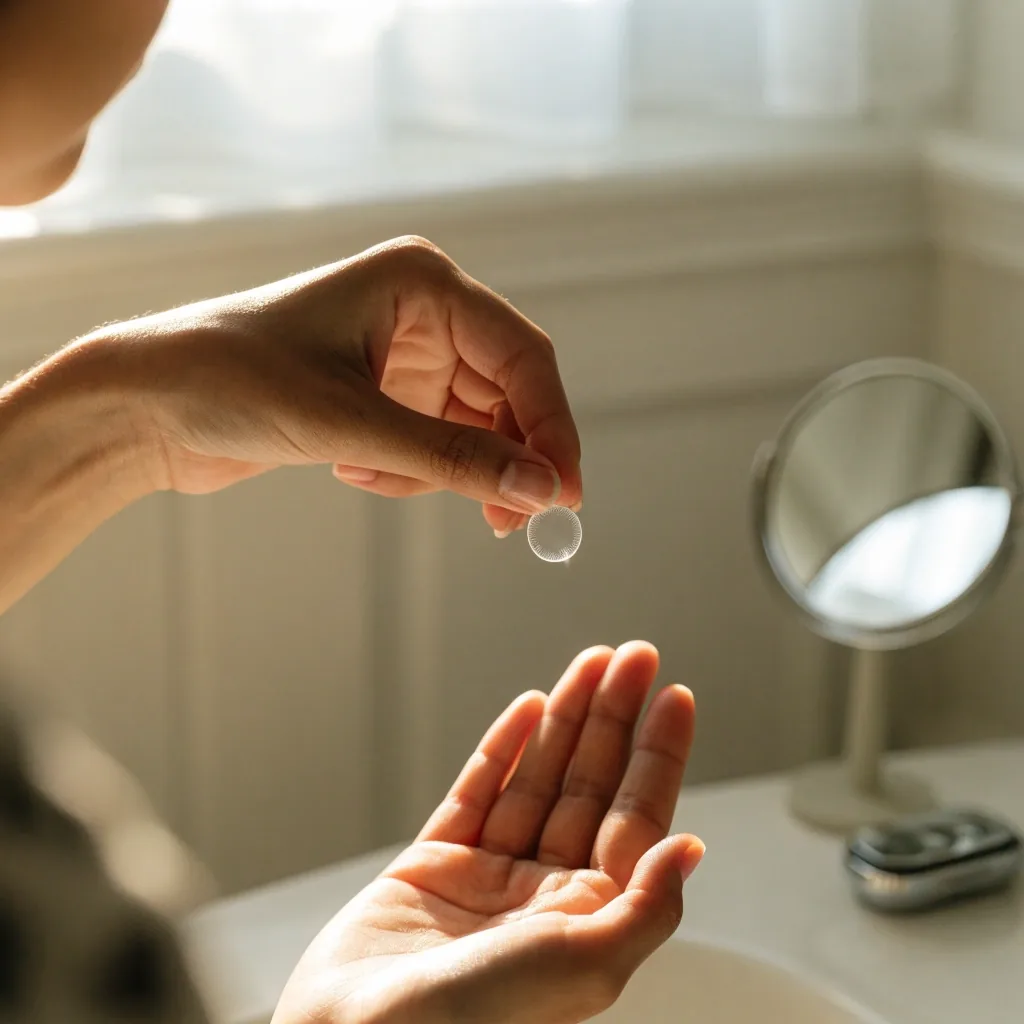
Soft lenses are the most widely used type, and they're available as daily disposables or reusable versions with a daily, weekly, or monthly schedule. They're generally comfortable to adapt to and easy to handle, which is why most first-time wearers in Indonesia start here. Their weakness is maintenance: reusable soft lenses depend on a consistent cleaning and storage routine, and short-cutting that routine is the fastest route to discomfort.
Soft lens material holds water, and comfort through a long day depends on that water staying where it belongs. Air-conditioned offices, long stretches of screen work, and a dry season all pull moisture out of the lens while you wear it. That is why a soft lens that feels perfect in the fitting room can feel tired by late afternoon — and why the fix is usually a fresh lens, a fresh solution, or a conversation about wear time rather than a different prescription.
Soft lens asks
If you wear reusable soft lenses, the daily care routine is not optional upkeep — it is the wear experience.
Toric lenses for astigmatism
A standard soft lens has one curvature. A toric lens adds orientation so it can correct astigmatism, which means it needs to sit at a specific angle on the eye. Fitters check that alignment during the fitting process, and a toric lens that rotates slightly can cause blurred or fluctuating vision. If your vision sharpens and softens with blinks, that's a fit question worth raising, not something to live with.
The lens has to sit at an angle
Unlike a spherical lens, a toric design only corrects astigmatism when its orientation marker lines up with your eye. That alignment is a measurement your fitter takes.
Rotation shows up as flicker
A lens that rotates slightly off-axis produces vision that sharpens and softens, often with blinking. It is a fit signal, not something to adapt around.
What to note before the visit
Write down when vision wobbles — after blinking, late in the day, or on waking — and bring that note to the fitting. It shortens the troubleshooting.

Multifocal lenses for near and distance focus
Multifocal lenses build two or more focus zones into one lens, which is how they support people who need help with both close and distant vision. Adaptation takes some wearers longer than a single-vision lens, and low-light vision can feel different at first. Most people settle in over the first couple of weeks. If it doesn't settle, that's a conversation for your fitter, not a reason to stop wearing lenses.
The adaptation period is real, and it is worth planning around. Reading a phone, then glancing up at a room, then back down again asks the lens to shift focus between zones. In the first days that refocus can feel like a small delay. Practising the sequence deliberately — paper, distance, paper — usually helps more than avoiding the tasks that cause it.
Rigid gas permeable lenses: less common, still relevant
Rigid gas permeable lenses are less common than soft lenses but remain in use, and for certain prescriptions they offer crisp optics that soft lenses don't match. They require their own cleaning and storage routine, and adaptation feels noticeably different from soft lenses: there's an initial period that many wearers describe as more involved. They're also long-lasting compared with soft lenses, which changes the cost picture over time.
The trade is straightforward. You spend more attention up front and replace lenses far less often. They also get their own products: rigid gas permeable lenses need cleaning and storage solutions made for their material, not the soft-lens solution already sitting on your shelf. Using the wrong one is one of the more common handling mistakes, and it is easy to avoid once you know it.
How the two materials differ day to day
Soft lenses
- Quick to adapt to for most first-time wearers.
- Replaced on a fixed schedule — daily, weekly or monthly.
- Cleaned and stored with standard soft-lens solution.
- More sensitive to dry air and long screen stretches.
Rigid gas permeable
- An initial adaptation period that many find more involved.
- Kept far longer before replacement, which changes yearly cost.
- Its own cleaner and its own storage solution, kept separate.
- Crisp optics for some prescriptions where soft lenses fall short.
Neither column is a recommendation. Your fitter matches the type to your eyes, your prescription and the hours you actually wear lenses.
The fit matters more than the label
Two wearers with the same prescription can end up in different lens types, because fit, tear film, lifestyle, and how much time you spend in air conditioning all factor in. A lens that fits well is comfortable, stable, and doesn't leave you aware of it. A lens that fits poorly can be the correct prescription and still feel wrong. Fit is the reason a follow-up exam matters even when nothing seems broken.
This is also why the label on the box is a starting point rather than an answer. The same spherical soft lens, in two different base curves or diameters, behaves like two different products on two different eyes.
What a fitter is actually checking
Matching lens type to your week
Daily disposables suit people who travel, work long or irregular hours, or want no cleaning routine at all. Reusable soft lenses suit wearers with a stable routine who don't mind daily care. Rigid gas permeable lenses suit some prescriptions and wearers willing to invest in a longer adaptation. Multifocal and toric options cut across those categories, so your prescription narrows the field before your lifestyle does.
Travel and irregular hours
Daily disposables
Open a fresh pair, wear, discard. No bottle of solution in a carry-on, no case to forget at a hotel sink, no question about how long the lens has been in the case.
Stable routine, lower cost per lens
Reusable soft lenses
You take on hand hygiene, fresh solution and case care every single day, and in exchange you run a monthly or weekly replacement schedule instead of opening a new pair each morning.
Long horizon, more attention
Rigid gas permeable
A longer adaptation in the first weeks, then a lens that lasts considerably longer. Worth discussing when your prescription is one where the optics really matter to you.
Your prescription narrows the field first
Astigmatism in the prescription rules out plain spherical designs. A need for both near and distance correction points toward multifocal options. Neither constraint is about comfort or preference — they are optical requirements, and they decide what your choice set even contains before lifestyle enters the conversation.
What each type demands of you
Daily disposables ask for nothing beyond daily disposal. Reusable soft lenses ask for hand hygiene, fresh solution, and lens case hygiene every day. Rigid gas permeable lenses ask for their own cleaning and storage products, not the soft-lens solution sitting on the shelf. Before choosing, read the requirements as carefully as the comfort claims, because the routine is what you'll actually live with.
A lens you enjoy wearing for eight hours and dread handling every night is a worse fit than a slightly less exciting lens with a routine you'll actually keep up.
The daily routine each type expects
Daily disposable soft lenses
Wash hands, insert, wear, remove, discard. No case, no bottle, no schedule to track beyond today.
Reusable soft lenses
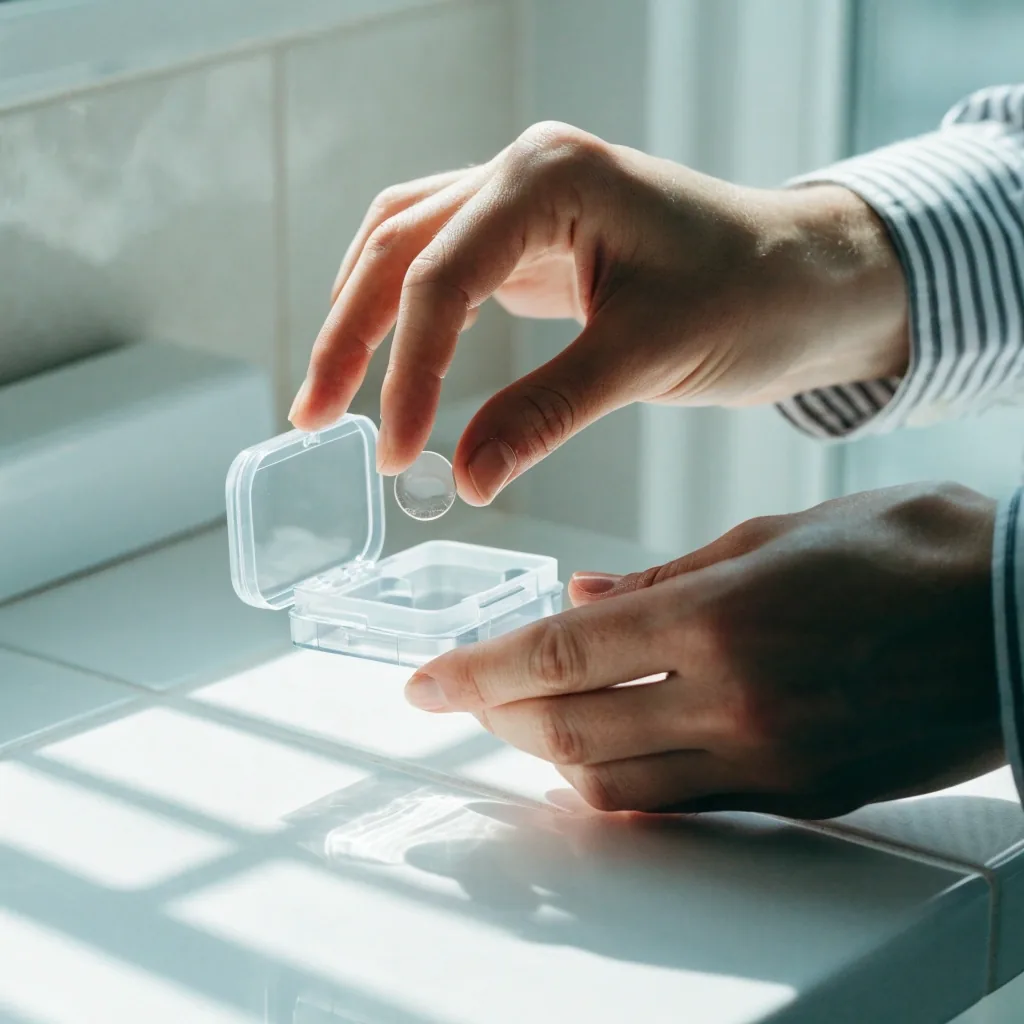
Clean hands, fresh solution every night, case emptied, rinsed and air-dried face down. Replacement on schedule, not on feel.
Rigid gas permeable lenses
Cleaning and storage products made for rigid material, kept apart from any soft-lens solution, plus a consistent removal routine while you adapt.
Toric and multifocal designs
The same routine as their base type — daily or reusable, soft or rigid. What changes is the fit appointment and the follow-up, not the nightly care.
The routine you keep beats the routine you plan
The point of this comparison is not to find the type with the fewest steps. It is to match the steps to the person who has to do them, every night, after a long day. If your routine already feels like a chore you skip, that is worth saying at your next fitting — there may be a type with fewer moving parts.
Switching types
Wearers switch lens types for many reasons: comfort changes, a new prescription, or a lifestyle shift toward more travel or more screen time. Switching is a fitting decision, not a purchase decision, so it starts with an eye-care professional rather than a product page. Bring your current lens details to the appointment, including the brand, replacement schedule, and any comfort issues you've noticed.
If you are moving from soft to rigid gas permeable lenses, expect the adaptation to be its own project rather than a same-day swap. A staged change — fit first, then wear time built up gradually — is normal, and it is worth asking what your first two weeks should look like.
What to bring to a fitting appointment
- The current lens box or packaging, or a photo of the label.
- Your written prescription record, if you have one.
- The replacement schedule you have actually been following.
- A short note on comfort issues: when they happen and what you were doing.
- Your typical wear hours on a workday and on a weekend.
None of this replaces the examination — it just means the conversation starts from what you already know instead of from scratch.
Where to go next
Four guides pick up where this comparison stops, depending on which question is next for you.
Hygiene and solution routine
Hand washing, fresh solution, case care and what to do when you are travelling or short on time.
Follow-up eye exams
Why a fit check matters even when nothing feels broken, and what the appointment actually covers.
Comfort, dry eye and overnight wear
What late-day dryness usually means, and why sleeping in lenses changes the risk picture.
Contact the editorial team
Questions about the site, corrections, or a topic you would like us to cover next.
Reach the editorial team at [email protected], Monday to Friday 9:00 AM – 6:00 PM, Saturday 9:00 AM – 1:00 PM.
Questions we get about lens types
How do I know which lens type I have?
Check the packaging or your prescription record. It will state whether the lens is a daily disposable, a reusable soft lens, a toric or multifocal design, or a rigid gas permeable lens, along with the replacement schedule.
Are rigid gas permeable lenses better than soft lenses?
They're different, not better in general. Rigid lenses can offer crisp optics for some prescriptions, but adaptation differs and they require their own care routine. Your fitter matches the type to your eyes and needs.
Can I switch from soft to rigid lenses on my own?
No. Switching lens types is a fitting decision. An eye-care professional needs to assess fit and confirm the new type suits your eyes before you change.
What if my toric lens vision wobbles when I blink?
That usually points to the lens rotating slightly off its intended orientation on the eye. It is a fit question rather than a prescription question, so raise it at your next appointment instead of waiting for it to improve on its own.
Does a multifocal lens replace reading glasses?
For many wearers a multifocal lens covers most close and distance tasks, and some still keep a pair of glasses for specific situations such as long reading sessions or very low light. Adaptation is individual, so it is worth discussing your particular tasks at the fitting.
Compare what you wear, then confirm it with a fitter
Reading the differences between soft lenses, toric lenses, multifocal lenses and rigid gas permeable lenses narrows the field. Confirming the choice is a fitting appointment — and that is the step worth booking next. Reach Bright Focus Way at Jl. Kemang Raya No. 27, Bangka, Mampang Prapatan, Jakarta Selatan, DKI Jakarta 12730, or call +62 21 5293 1949 during office hours.
Still comparing? Other pages worth reading
Lens type sits inside a wider routine. How you replace lenses, how you clean them, and how much time you spend in dry air all change what daily contact lens wear feels like — and every one of those pages starts from the same bench.
If you are still deciding, start with the replacement schedule guide. It sets the rhythm the rest of the routine hangs on.
Replacement schedule and wear discipline
Daily, weekly and monthly rhythms, and why replacing on schedule matters more than replacing on feel.
Hygiene and solution routine
The order of steps, the case that gets forgotten, and what solution should never be topped up.
Everyday situations: makeup, travel and screens
Practical adjustments for long flights, air-conditioned offices and the order you put makeup on.
About Bright Focus Way
Who writes these guides, how the material is put together, and how to suggest a topic.